How To Plan A City Break Packing List That Leaves Room For Plans
A practical step-by-step guide to how to plan a city-break packing list that leaves room for plans, including preparation, instructions, common issues, tips, and next steps.
How To Plan A City Break Packing List That Leaves Room For Plans
This guide helps you build a city-break packing list that leaves room for spontaneous plans. Instead of over-packing, you'll learn to choose flexible items, plan for changes, and keep your bag light enough for unexpected adventures. You'll find practical steps, quick reference solutions, and tips to handle common issues, ensuring your trip is both prepared and open to new experiences.
Fast Answer
- Create a capsule wardrobe with mix-and-match items in one color palette, so you can create multiple outfits from a few pieces and leave space for souvenirs.
- Pack a small daypack with essentials like water, snacks, a power bank, and a map, so you're ready for unplanned excursions without carrying your main luggage.
Before You Start
- Check the weather forecast for your travel dates and the specific city, including evening temperatures, and note any chance of rain or unusual heat.
- List the planned activities (museum visits, dinners, shows) and their dress codes, then identify which items can serve multiple purposes.
- Think about your return trip: leave room for purchases by packing a foldable tote or leaving half of your suitcase empty.
- Review your accommodation's amenities (laundry, safe, hairdryer) to avoid packing items that are already provided.
Step-by-Step Instructions
Create a Versatile Capsule Wardrobe
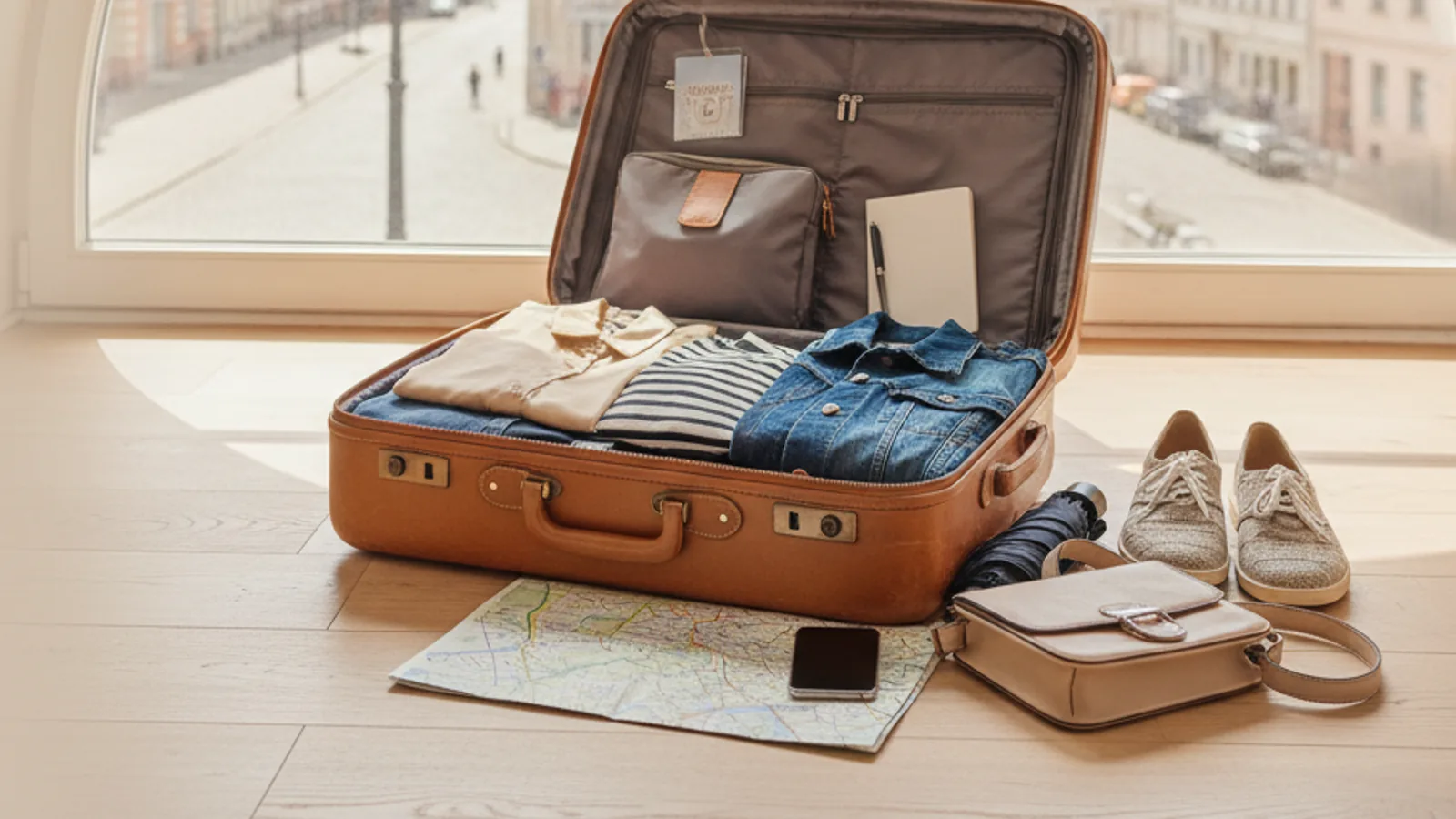
Start by selecting a color palette of neutrals and one accent color. Choose three tops, two bottoms, one dress or smart-casual outfit, and one light jacket. Ensure every top matches every bottom, so you can create at least six outfits from these pieces. For example, a white shirt, a striped tee, and a black blouse can pair with dark jeans, chinos, or a skirt. Add one pair of comfortable walking shoes and one slightly dressier pair. This reduces bulk and gives you flexibility. Check that all items are wrinkle-resistant and can be layered for temperature changes. This matters because a capsule wardrobe ensures you look put-together without carrying excessive clothing, leaving room in your bag for spontaneous purchases.
Pack a 'Just-in-Case' Daypack
Prepare a small daypack that you can carry around the city. Include a reusable water bottle, a few granola bars, a portable power bank, a basic first-aid kit (plasters, pain relievers), a compact umbrella, and a physical map of the city. Also, carry a copy of your passport and a small amount of local currency. This bag should be light enough to carry all day, but essential enough to handle unexpected situations like a sudden downpour, low phone battery, or getting lost. Check that the daypack is comfortable to wear and has secure zippers. This matters because having these essentials on hand lets you say yes to last-minute detours without being caught unprepared, and it prevents you from returning to your hotel for every small need.
Leave Room for Souvenirs and Spontaneous Finds
When arranging your main suitcase, deliberately leave at least 20% of the space empty. You can achieve this by packing fewer pairs of shoes (they take up a lot of room) and using compression bags for clothes. Also, pack a collapsible tote bag that can be used for extra items on the way home. Check if your luggage can be locked and if it meets airline size requirements (if flying). This matters because leaving empty space allows you to bring back unique items you discover, such as local crafts or a bottle of regional wine, without having to buy an extra bag or ship items home. The empty space also gives you flexibility if you decide to buy new clothes during your trip.
Plan for Laundry and Reuse
Identify if your accommodation has laundry facilities or if there is a self-service laundromat nearby. If so, pack a small amount of eco-friendly laundry detergent sheets. Many hotels offer laundry service, but it can be expensive; check the price list or ask at reception. Plan to wear items multiple times—jeans can be worn for several days, and a shirt can be worn with different accessories. Check that your chosen fabrics are quick-drying and easy to hand-wash in a sink. This matters because being able to wash clothes reduces the number of items you need to pack, allowing you to pack lighter and leave more room for spontaneity. It also saves you from carrying dirty clothes back home.
Use Modular Packing Organizers
Invest in a set of packing cubes or compression sacks. Categorize your items: one cube for tops, one for bottoms, and one for underwear and socks. Place your daypack flat at the bottom of the suitcase, then layer the cubes on top. This keeps your bag organized and allows you to access items without unpacking everything. Check that the cubes are the right size for your suitcase and that they compress well. This matters because organized packing not only saves space but also makes it easier to find items quickly, reducing stress during your trip. If you want to change your plans, you can simply take out one cube and leave the rest untouched.
Review and Adjust Your List 24 Hours Before Departure
The day before you leave, lay out everything you plan to pack and evaluate each item against your planned activities and the weather forecast. Remove any item that is not essential or that you could easily buy at your destination. Consider your return trip: if you plan to shop, leave extra space. Check that all electronic devices and chargers are packed, and that you have all necessary documents (ID, tickets, reservations). This matters because a final review prevents over-packing and ensures you haven't forgotten crucial items. It also gives you a chance to research the local dress code or customs, so you can adjust your wardrobe accordingly and be ready for spontaneous invitations.
Quick Reference
| Situation | Action | Why it helps |
|---|---|---|
| You are invited to a nice restaurant during your city break and need a smart outfit. | Pack a versatile dress or a collared shirt and chinos that you can dress up with accessories like a scarf or jewelry. | These items are compact and can transform your day look into an evening outfit, allowing you to say yes without worrying about your attire. |
| The weather forecast changes suddenly, and a cold front moves in. | Pack a lightweight, packable down jacket or a warm cardigan that can be layered over your existing outfits. | Layering pieces are adaptable to temperature swings and take up minimal space, keeping you comfortable without sacrificing suitcase room. |
| You run out of phone battery while exploring and need directions back to your hotel. | Carry a portable power bank and a physical map; also know your hotel's address and phone number written on a card in your pocket. | A power bank and a paper map provide reliable backups when technology fails, and having your hotel info ensures you can navigate independently. |
Common Issues
- You packed too many shoes, and they take up most of your suitcase.: Limit yourself to two pairs: one comfortable walking shoe and one slightly dressier pair. Wear the heaviest pair on the plane or train, and stuff socks or small items inside the others to save space.
- Your clothes wrinkle easily, making you look disheveled on spontaneous outings.: Choose wrinkle-resistant fabrics like merino wool, polyester blends, or cotton-poly mixes. Roll clothes instead of folding, and use tissue paper between layers to minimize creases.
- You forgot to pack a small daypack, so you're stuck carrying your main bag everywhere.: Pack an ultra-light foldable backpack or tote in your suitcase. It takes almost no space and can be used for day trips, groceries, or souvenirs.
Advanced Tips
- Choose a color palette of black, white, grey, and one accent like red or blue; then you can mix and match every piece with confidence.
- Use the 'capsule wardrobe' method: pick 5 to 7 tops, 3 to 4 bottoms, and 2 to 3 outer layers that all work together, eliminating decision fatigue.
- Pack a small sewing kit with needles and thread in your carry-on for emergency repairs, so a loose button doesn't ruin a day of exploring.
Final Checklist
- Check the weather forecast and pack layers that can be added or removed easily.
- Verify that you have all essential documents, chargers, and toiletries in travel-size containers.
- Leave at least 20% of your bag empty for souvenirs and spontaneous purchases.
- Think through your planned activities and ensure your outfits are suitable for dress codes, but also flexible for changes.
FAQ
How do I know I'm overpacking?
A good rule is to lay out all your items and remove anything you're 'just in case' about. If you can survive with half the clothes you've laid out, you're overpacking. Also, if your suitcase is full and you're lifting it with difficulty, that's a sign to cut back.
What should I do if I forget something important?
Don't panic. Most cities have stores where you can buy essentials like toiletries, chargers, or clothing. For items like prescription medication, you can contact a local pharmacy or your accommodation for advice. Always carry a list of what you packed, so you know what to replace.
How can I leave more room for souvenirs when I'm packing?
Use compression bags for clothes, and roll your items to reduce air. Choose versatile shoes and limit yourself to two pairs. In addition, pack a foldable tote or duffel that you can use as an extra bag on the return trip, and consider buying lightweight souvenirs like postcards or magnets.