How To Plan A Comfortable Everyday Shoe Rotation That Still Feels Put Together
A practical step-by-step guide to how to plan a comfortable everyday shoe rotation that still feels put together, including preparation, instructions, common issues, tips, and next steps.
How To Plan A Comfortable Everyday Shoe Rotation That Still Feels Put Together
A comfortable everyday shoe rotation is not about owning many pairs, but about choosing a few versatile, supportive shoes and alternating them thoughtfully. This guide helps you plan a small collection of shoes that feel good on your feet, match your outfits, and keep you looking put together. You will learn to assess your daily needs, evaluate your current shoes, choose two or three key pairs, and create a simple weekly rotation. The process includes practical checks, such as verifying arch support and outsole wear, to keep your feet healthy. By the end, you will have a personalized rotation that makes mornings easier and ensures you always have a comfortable, stylish option.
Fast Answer
- Start by choosing two to three pairs of shoes that fit well, support your arches, and match most of your outfits, then rotate them every other day to let them air out.
- Keep a simple checklist: check the outsole for uneven wear every two weeks, replace insoles when they flatten, and always have one casual and one slightly dressier option in your rotation.
Before You Start
- List your typical weekly activities, such as walking to work, running errands, or standing at a desk, and note which shoes you currently wear for each.
- Look at the shoes you already own and evaluate their condition: check the heels, soles, and insoles for signs of uneven wear or flattening, and decide which are still comfortable.
- Measure your feet at the end of the day when they are slightly swollen, and use those measurements as a baseline for any new shoes you might add to your rotation.
- Write down your outfit colors often and note which shoe colors (like black, brown, or white) would match most of what you wear, so you can choose versatile pairs.
Step-by-Step Instructions
Assess Your Daily Footwear Needs
Start by observing what you do most days. For a full week, jot down every activity that involves being on your feet, and note how long you are standing or walking. For example, you might have a job that requires standing for four hours, plus a commute that involves a fifteen-minute walk, and weekend errands that involve another hour of walking. Also, consider the typical weather and the surfaces you walk on, like concrete, carpet, or tile. Once you have this list, think about the specific support your feet need. Do you need cushioning for long periods on hard floors, or more traction for walking outside? This step matters because the right shoe for office standing is different from a walking shoe. Write down your main need, such as 'cushioned support for standing' or 'flexible sole for walking,' and keep that as your top priority. This assessment prevents you from buying shoes that look nice but do not handle your actual activities, which is the first step to a rotation that really works.
Evaluate Your Current Shoe Collection
Take out all the shoes you currently own and place them on a flat table or floor. For each pair, do three checks. First, look at the outsoles: if the heel is worn down more on one side than the other, the shoe is not supporting your stride correctly. Second, press your thumb into the insole under the ball of your foot; if it feels flattened and hard, the cushioning is depleted. Third, inspect the upper material for cracks or stretching that may compromise fit. Make a yes or no note for each pair on whether it passes all three checks. Also, wear each pair indoors for at least an hour and notice any hot spots or rubbing. This evaluation matters because it reveals which shoes are still healthy for your feet. Keeping worn-out shoes in your rotation can cause foot fatigue and contribute to problems like plantar fasciitis. You might find that you only have one or two pairs that are truly comfortable, which will guide your next steps: either adding a new pair or deciding which old ones to retire.
Choose a Foundation Pair for Daily Walking
Pick one pair of shoes to be your main workhorse for days when you do a lot of walking or standing. This pair should have a firm heel counter, a supportive arch, and a sole that bends only at the toe, not in the middle. Test for flexibility by holding the shoe and trying to fold it in half; it should not fold easily. The upper should be made of breathable material, like mesh or soft leather, to reduce moisture and odor. When you try them on, wear the same type of socks you usually wear, and ensure there is about a thumb's width of space between your longest toe and the end of the shoe. This check matters because your foundation pair takes the most impact during the day, and if it lacks support, you will feel it in your knees and back by evening. Also, consider the color: choose a neutral like dark gray or tan that matches many pants and jeans. After buying, wear them indoors for a few hours to confirm there are no pressure points.
Add a Versatile Casual Pair for Light Days
Now select a second pair that suits lighter activity, such as running errands, short walks, or days when you are mostly sitting but still need to look put together. This pair should be less bulky than your foundation pair but still offer some cushioning and a non-slip sole. For example, a clean canvas sneaker or a minimalist leather shoe with a low heel works well. Make sure the toe box is roomy enough that your toes can spread slightly, as tight shoes can cause bunions. Check that the shoe is easy to slip on or fasten securely; if you often have to tie laces, a pair with stretchy laces or a simple strap may be more convenient. This check matters because your casual pair should not be a compromise on comfort; it still needs to support your feet during errands that may unexpectedly involve more walking than planned. To keep it looking fresh, choose a color that hides dirt, like navy or dark brown, and avoid white unless you are prepared to clean it often.
Plan a Simple Two-Week Rotation Schedule
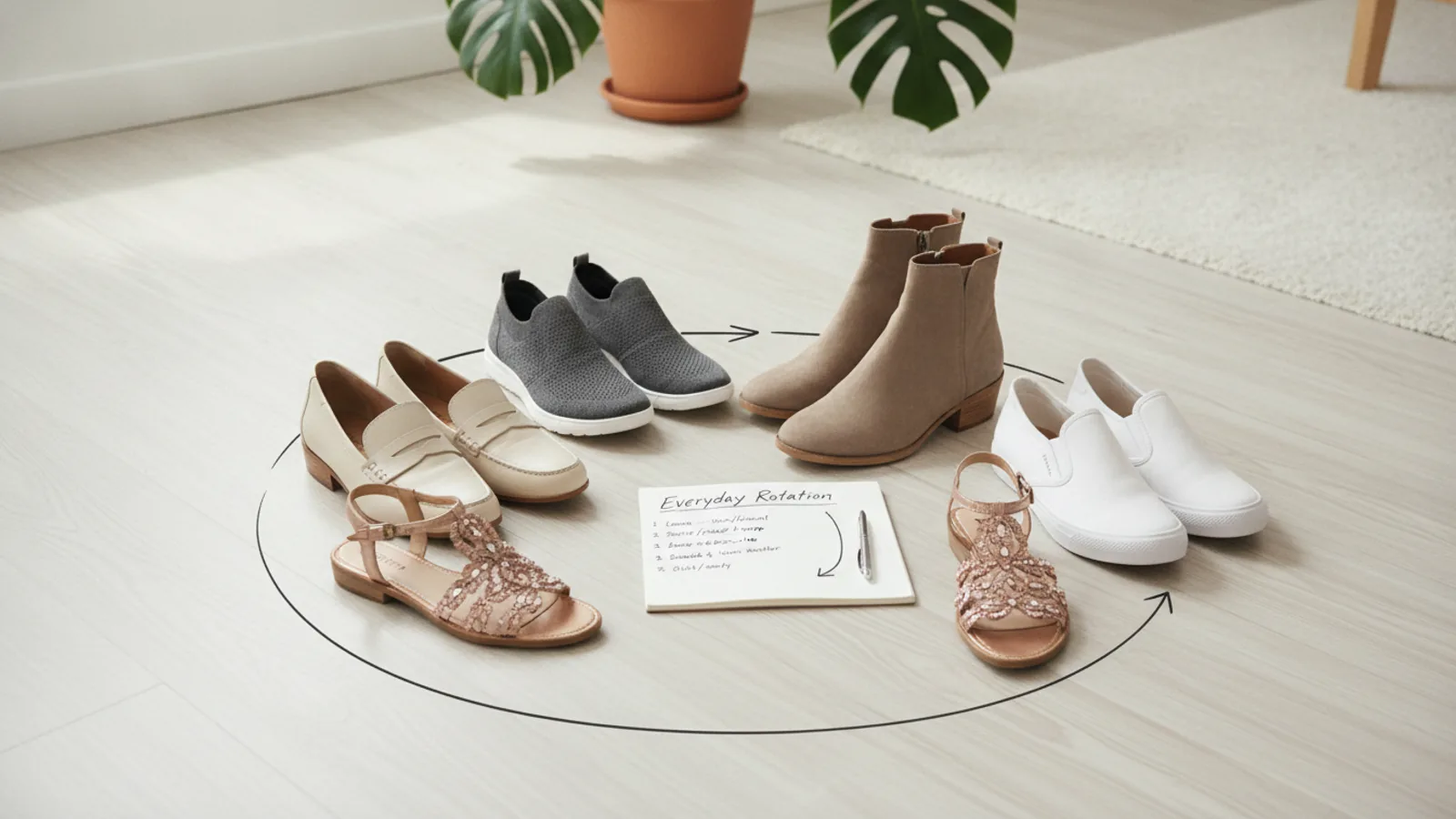
Write a simple two-week calendar on a piece of paper or in a notes app. For each day, assign one of your two or three pairs. The key rule is to never wear the same pair two days in a row. For example, week one: Monday foundation, Tuesday casual, Wednesday foundation, Thursday casual, Friday foundation, Saturday casual, Sunday rest or a third pair. Week two is the same but swap the order. If you have a third pair, assign it to days when you have a special event or a long day on your feet. Also, plan to wear your foundation pair on days with the most walking, and the casual pair on lighter days. This rotation matters because alternating allows each pair to dry out completely, which reduces odor and prevents the breakdown of inner materials. After two weeks, look at which pair felt best and make adjustments. The schedule should be simple but intentional, so you never have to think about which shoe to put on in the morning.
Maintain and Monitor Your Rotation Weekly
Every week, take five minutes to inspect your shoes. Check the outsoles for small stones stuck in the tread and remove them with a soft brush. Look at the insoles: if they become compressed and do not bounce back when you press them, replace them with a new cushioned insole that fits your arch type. Also, check the laces and stitching for wear, and wipe down the upper with a damp cloth if there is dirt. At the end of each month, do a deeper cleaning: remove the insoles and let the shoes air dry for 24 hours, but avoid putting them in a washing machine or dryer, as that can damage the materials. This maintenance matters because shoes gradually lose support, and catching problems early prevents foot pain. By monitoring, you also notice when a pair no longer serves you, so you can retire it before it harms your feet. Document your inspections in a small notebook or note on your phone, and if a shoe fails an inspection, mark it as 'retired' and remove it from your rotation.
Quick Reference
| Situation | Action | Why it helps |
|---|---|---|
| Having trouble deciding which shoe to wear for a long day on your feet | Check your schedule in the morning and if you have more than 30 minutes of walking or standing planned, choose your foundation pair that you designated for heavy days, and make sure it is not the one you wore yesterday. | Your foundation pair is designed with more support and cushioning, so using it on heavy days protects your feet and reduces fatigue, while allowing your other shoes to rest and air out. |
| Noticing that one pair of shoes is getting a lot of wear and the sole is flattening | Take that pair out of your rotation immediately and inspect the outsole and insole for uneven wear; if the heel is worn down on one side or the insole is hard, replace the insole with a new one or plan to retire the shoes. | Continuing to wear a pair with uneven wear can cause improper foot alignment and lead to joint pain, so addressing the wear pattern early keeps your rotation healthy and extends the life of your shoes. |
| Suddenly developing a blister or hot spot on your foot even though you are wearing a comfortable pair | Stop wearing that pair for the rest of the day, and inspect the shoe for a rough seam or a worn area inside. Feel the inside with your hand, and if there is a rough spot, cover it with a moleskin patch or use a shoe stretcher on tight areas. | A blister often means a small defect or a change in fit, and ignoring it can lead to a more serious foot issue. Addressing the irritation keeps your rotation usable and prevents pain from sidelining you. |
Common Issues
- Shoes start to smell bad even though you rotate them: Take out the insoles after every couple of uses and let them air dry for at least 24 hours. Sprinkle a light layer of baking soda inside the shoes overnight, then tap it out. Also, wear moisture-wicking socks made of synthetic blends rather than pure cotton, as cotton holds sweat and increases odor.
- You find yourself always reaching for the same two shoes, leaving others unused: Set a rule for yourself: if a pair has not been worn in two weeks, you either need to schedule a day for it or retire it. Sometimes you buy a pair that does not fit your activities, so give it away or donate it to keep your rotation streamlined and truly comfortable.
- New shoes cause blisters even after a few wears, so you avoid them: Instead of forcing a break-in, adjust the fit. Use a blow dryer on a low setting to warm the leather, then wear thick socks and walk around for 10 minutes. If the shoe is too tight, use a shoe stretcher overnight. Also, apply a thin layer of petroleum jelly to the hot spots on your feet before wearing them.
Advanced Tips
- Keep a 'shoe journal' for a month, noting which pair you wear each day and how your feet feel at the end of the day, to identify patterns and adjust your rotation based on real feedback.
- Consider buying a backup pair of your favorite foundation shoe when it is on sale, because shoe models change and you might not find the same fit later, so you can rotate identical pairs to extend their life.
- For special occasions, have one pair of dressy shoes that are still comfortable, but do not wear them for more than four hours at a time; keep a foldable flat or light pair in your bag just in case your feet start to ache.
Final Checklist
- Assessed your weekly activities and identified your main foot support needs, such as cushioning for standing or flexible soles for walking.
- Evaluated all your current shoes using the three checks: outsole wear, insole flattening, and upper condition, and retired any that failed.
- Acquired a foundation pair for heavy days and a versatile casual pair for light days, both with proper fit and neutral colors that match most of your outfits.
- Created a two-week rotation schedule that alternates pairs daily, and set a reminder to place tomorrow's shoes by the door each evening.
FAQ
How many pairs of shoes do I actually need for a comfortable rotation?
You only need two to three pairs to have a comfortable and effective rotation. Two pairs are the minimum so you can alternate daily and let each pair dry out. Three pairs give you more variety for different activities, like one for walking, one for casual, and one for slightly dressier occasions. It is better to have three comfortable pairs than ten pairs that hurt your feet, because you will never wear the uncomfortable ones, and they just take up space. Focus on quality over quantity, and choose pairs that serve clear purposes in your daily life.
How often should I replace my shoes in the rotation?
You should replace a pair when the outsole is visibly worn down unevenly, the insole has lost its cushioning and feels hard when you press on it, or the upper shows cracks or tears. For most people who walk moderately, a good pair of shoes lasts between six to twelve months, but this depends on how much you walk and the materials. Check your shoes every month for signs of wear, and if you notice any of these issues, inspect them more often. Also, if you start to experience foot pain that you did not have before, check your shoes first, because they may be past their prime.
What should I do if I have to wear the same shoes every day for work?
If you have a uniform requirement that forces you to wear the same pair every day, you need to be extra careful about foot health. First, buy two identical pairs and alternate them on consecutive days, so each pair has 24 hours to air out. This reduces odor and moisture. Second, remove the insoles every night and let them dry separately. Third, replace the insoles every three months if they flatten quickly, as they provide essential cushioning. Finally, talk to your employer about any flexibility, but if you cannot change the policy, using the two-pair trick is a practical way to maintain comfort.