What To Check Before Choosing A Useful Capsule Wardrobe For Changeable British Weather
A practical step-by-step guide to what to check before choosing a useful capsule wardrobe for changeable British weather, including preparation, instructions, common issues, tips, and next steps.
What To Check Before Choosing A Useful Capsule Wardrobe For Changeable British Weather
Before committing to a capsule wardrobe for Britain's famously changeable weather, check how your planned pieces layer, how they cope with sudden rain and unexpected warmth, and how easily they mix into outfits you already own. This guide walks through the practical checks that save money, storage space, and daily frustration.
Fast Answer
- Choose a core of mid-weight, breathable layers that can be added or removed as temperatures shift, and confirm each piece works with at least three others in your planned set.
- Test every outer layer for water resistance and packability, and verify that your footwear can handle both wet pavements and drier, warmer spells without discomfort.
Before You Start
- Audit your current wardrobe and note the clothes you reach for most often in unpredictable weather, as these show your real preferences and habits.
- List the specific weather conditions you face in a typical week, including rain, wind, and temperature swings, to guide your layering choices.
- Measure your available storage space and hanging rail length so your capsule fits neatly without cramping your room.
- Set a practical budget limit for new purchases, but avoid attaching a specific price to any single item until you have chosen your core pieces.
Step-by-Step Instructions
Audit your current clothing habits
Start by examining what you actually wear during a typical unsettled British week. Lay out everything you have worn in the last seven days, including weekends, and sort it by how often each item was used. Ask yourself which pieces kept you comfortable when the morning was cold, the afternoon turned warm, and a shower arrived by four o'clock. You will likely notice that you already own several adaptable garments, such as a soft cotton shirt, a merino jumper, or a packable jacket. These are your building blocks. Write down the items you repeatedly chose, because they reveal your personal preferences for colour, fit, and fabric. This audit prevents you from buying duplicates of things you never reach for, and it highlights gaps where you genuinely lack a versatile piece, such as a lightweight rain shell or a breathable cardigan. The key is to be honest about what you avoid wearing, and why, so your capsule does not repeat past mistakes.
Plan your layering system carefully
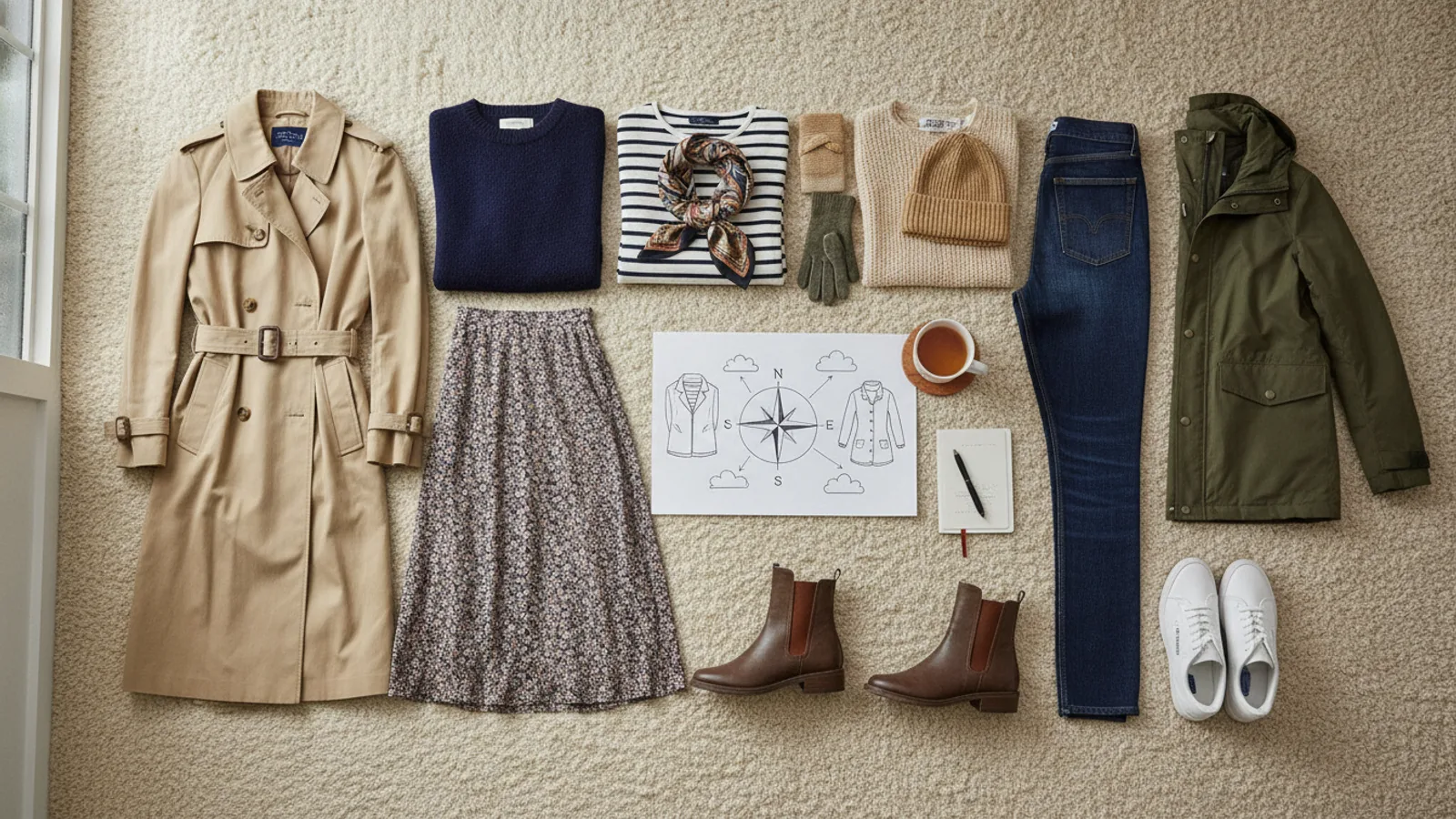
A successful capsule for British weather depends on a system of layers that can be added or removed without looking bulky. Begin by identifying three base layers that are thin, breathable, and comfortable against the skin, such as a cotton t-shirt, a fine knit, and a long-sleeved top. Next, choose two mid layers that provide insulation but are not too heavy, like a flannel shirt and a lightweight fleece. Finally, select one or two outer layers: a waterproof rain jacket for wet days and a warmer lined coat for colder spells. For every layer, check that it fits comfortably over the one underneath it, with enough room to move your arms freely. Also verify that each layer works with at least three other pieces in your planned set, creating multiple outfit combinations. This check matters because a piece that only pairs with one other item will limit your outfit options and reduce the capsule's usefulness. By planning layers first, you avoid the common mistake of buying a beautiful jumper that is too bulky for your rain shell.
Test each fabric against real rain
Do not just read the label; test how every outer layer and, ideally, your footwear behaves in actual rainy conditions. Fill a spray bottle with water and spray the shoulders and sleeves of your rain jacket for ten seconds, then check whether the water beads off or soaks through. For shoes, step into a shallow puddle or splash water over the toe area to see if the material stays dry. Remember that British rain often comes with wind, so also hold your jacket against a strong breeze to feel if it flaps or lets cold air in. If a jacket is not fully waterproof, it will need a separate mid layer underneath that can handle dampness. Check the seams and zippers for any signs of weakness, because these are common places for leaks. This hands-on test matters because a garment may be 'showerproof' yet fail during a proper downpour, leaving you wet and uncomfortable in the middle of your day.
Check how packable your main pieces are
British weather can change dramatically within a few hours, so you may need to carry an extra layer with you. For each planned capsule item, especially outerwear and jumpers, test how compactly you can fold or roll it into a small bag or backpack. A good packable layer should fit into a pouch or take up only about the size of a water bottle when compressed. Place the folded item in your bag, then open and close your bag several times to ensure it does not obstruct access to your other essentials. Also check the weight: a heavy coat might keep you warm, but it might become a burden if you have to carry it all afternoon. The reason this check matters is that a capsule wardrobe is supposed to make daily life easier, not add bulk to your commute or weekend walk. If an item is too bulky, you will be tempted to leave it at home, which defeats the purpose.
Review your footwear for wet conditions
Your shoes must handle both rain puddles and milder, drier pavement. Start by checking the sole pattern: deep, grippy treads provide better traction on wet surfaces, whereas smooth soles can be slippery on wet leaves or polished flooring. Next, consider the material: leather or a water-resistant synthetic upper will keep your feet drier than cotton canvas. Turn the shoe upside down and press on the toe and heel to feel if the sole is flexible enough for comfortable walking. Then, inspect the inside for any signs of moisture built up from previous wears, as this may indicate poor breathability. Finally, walk in them on a wet surface for a few steps to test grip and comfort. This check matters because damp feet can quickly ruin a day out, and a capsule wardrobe should include at least one pair of shoes that are both smart enough for casual errands and sturdy enough for a country walk.
Create a mix-and-match matrix
Before finalising your capsule, create a simple grid on paper or in a notes app showing which tops, bottoms, and outer layers can be paired together. List each top down the side and each bottom across the top, then tick the boxes where the two pieces create a cohesive outfit, considering colour, pattern, and formality. Aim for at least three ticks against every top and three against every bottom, so you can create a week's worth of outfits without repeating a combination too often. Also check that your chosen accessories, such as scarves, hats, and belts, work with at least two different outfits each. This exercise reveals any weak links in your planned set, for example a top that only matches one bottom, which would limit your options. Adjust your choices accordingly, perhaps by swapping a patterned top for a neutral one. This check is essential because a capsule wardrobe only works if every piece earns its place by being truly versatile.
Quick Reference
| Situation | Action | Why it helps |
|---|---|---|
| Morning is cold but the forecast promises a sunny afternoon | Wear a thin base layer with a mid layer, and carry a packable rain jacket that you can remove and stuff into your bag when the sun appears. | This combination adapts to rising temperatures without leaving you carrying a heavy coat, and the packable jacket deals with any surprise shower. |
| You are heading out for a walk and the sky looks threatening | Put on your water-resistant footwear, take a waterproof jacket with a hood, and bring a spare dry pair of socks in a small waterproof pouch. | Waterproof footwear and a proper rain shell keep your body dry, while spare socks protect you if the rain gets in despite your best checks. |
| You find yourself wearing the same two outfits every week and ignoring other pieces | Pull out your outfit photos and your mix-and-match matrix, then deliberately set aside three pieces you rarely use and test them in different combinations for a full day. | Relying on the same few outfits means you may have chosen pieces that are too specific or lack versatility; testing the others shows you what works or what to swap. |
Common Issues
- A rain jacket labelled 'water resistant' lets rain through during a long downpour: Check the seams and zippers for taped seals, and treat the jacket with a durable water repellent spray designed for outerwear. If it still fails, choose a jacket with fully taped seams and a waterproof membrane.
- Your capsule wardrobe feels restrictive because most outfits look similar: Add one or two statement accessories, such as a patterned scarf or a coloured hat, that can be swapped in to change the look. Also revisit your mix-and-match matrix to ensure you are using neglected pieces in new ways.
- A favourite jumper pills or loses shape after only a few washes: Always wash knitwear on a delicate cycle or hand wash in cold water, then lay it flat to dry instead of hanging it. Use a fabric shaver to remove pills, and avoid wringing the garment.
Advanced Tips
- Invest in a compact, high-quality waterproof jacket that is truly breathable, so you stay dry from both rain and perspiration.
- Choose a colour palette of no more than five tones that all work together, and make sure at least three of them are neutral shades like navy, grey, or olive.
- Consider a small, portable umbrella that opens automatically, but rely on your waterproof layers first because umbrellas are less effective in windy conditions.
Final Checklist
- I have audited my current wardrobe and identified which pieces I actually wear on changeable days.
- I have planned a layering system where each item combines with at least three other pieces in my set.
- I have tested every outer layer and pair of shoes against water to confirm they meet my rainy-day needs.
- I have created a mix-and-match matrix and photographed my favourite outfits for quick reference.
FAQ
How many pieces should a capsule wardrobe for British weather include?
There is no fixed number, but a good starting point is around 20 to 25 items including clothing and shoes, not counting accessories or underwear. Focus on versatility: choose layers that can be worn alone or together, and make sure each piece works with at least three others. You can adjust the number based on your storage space and personal style.
What fabrics work best for changeable weather?
Natural fibres like merino wool, cotton, and wool are breathable and insulate well, while synthetics like polyester and nylon dry quickly and resist wind. For outer layers, look for a waterproof membrane and taped seams. The key is to choose fabrics that can handle both moisture and temperature fluctuations without becoming uncomfortable.
How often should I update my capsule wardrobe?
Review your capsule at least once a season, especially in spring and autumn when the weather can be most unpredictable. Swap out items that no longer fit, have worn out, or that you have not worn for a whole season. Add one or two new pieces that fill a specific gap you noticed during your daily use.