A Practical Guide To A Comfortable Everyday Shoe Rotation That Still Feels Put Together
A practical step-by-step guide to a practical guide to a comfortable everyday shoe rotation that still feels put together, including preparation, instructions, common issues, tips, and next steps.
A Practical Guide To A Comfortable Everyday Shoe Rotation That Still Feels Put Together
This guide helps you build a small, comfortable shoe rotation that still looks polished and put together. You will learn how to choose versatile shoes, organize them by use, and keep them in good shape. The focus is on practicality, not fashion trends, so you can feel confident and at ease every day.
Fast Answer
- Start with three pairs: one for everyday walking, one for dressier occasions, and one for active or wet weather.
- Rotate shoes to let them air out and maintain their shape; this extends their life and keeps them comfortable.
Before You Start
- Check the soles of your current shoes for uneven wear; this shows how you walk and what support you need.
- Look for shoes with a removable insole so you can replace it when it compresses.
- Consider the climate: pick breathable materials for hot days and waterproof options for rain.
- Measure your feet at the end of the day because they swell slightly; this ensures a better fit.
Step-by-Step Instructions
Audit Your Current Shoes
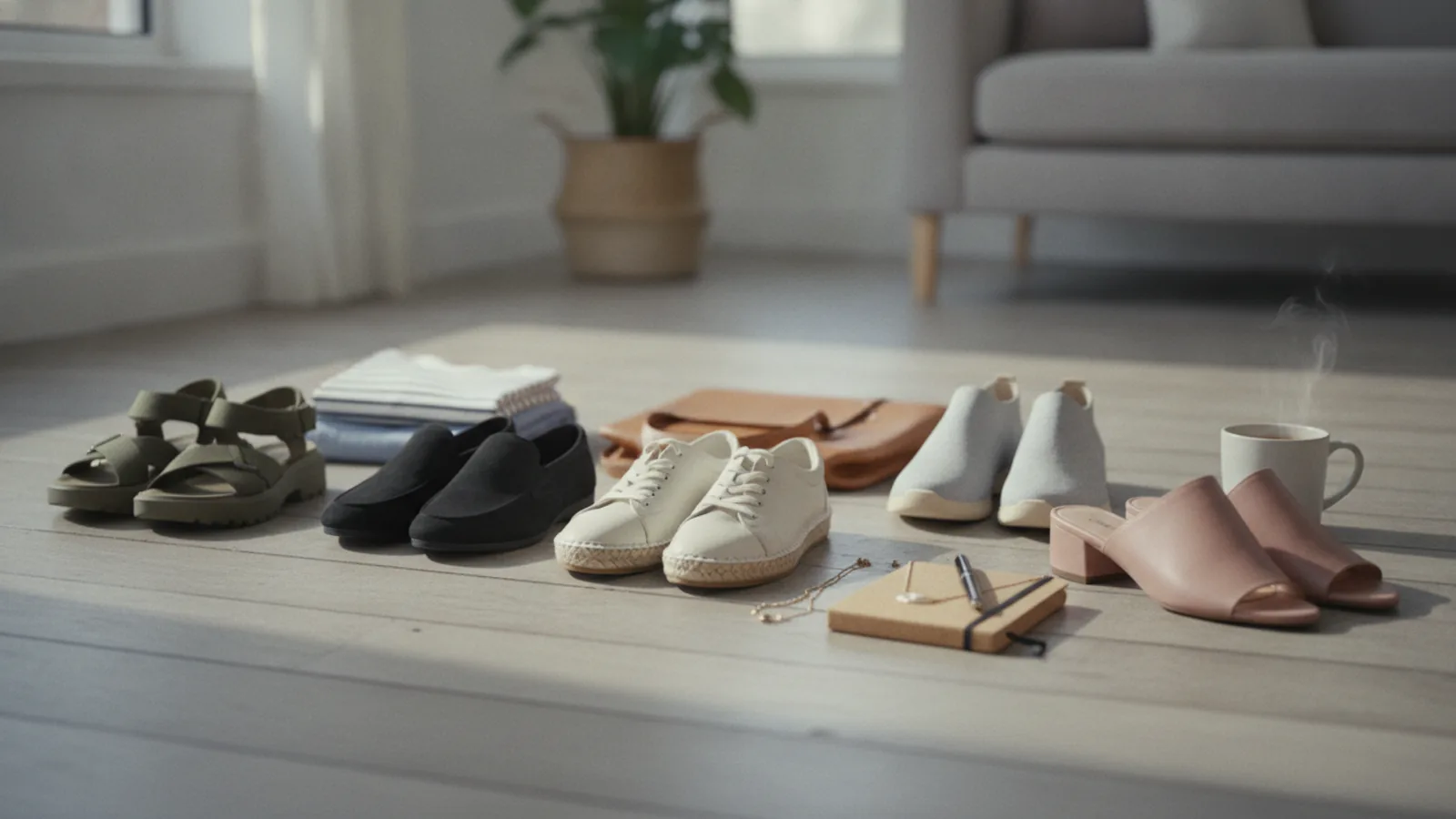
Begin by pulling out every pair of shoes you own and placing them on the floor. Look at each pair and check the soles for worn spots, especially at the heel and ball of the foot. Uneven wear can indicate a gait issue or poor support, so note any pairs that are overly worn on one side. Also check the upper material for cracks or stretching. Sort them into three piles: everyday wear, dressier occasions, and active or weather-proof. Remove any shoes that are beyond repair or that cause discomfort when you walk. This gives you a clear starting point and prevents you from buying duplicates. If you have more than five pairs, you likely already have a rotation; you just need to refine it. The goal here is to see what you actually use, not what you think you should wear.
Define Your Daily Needs
Now think about a typical week. Write down the main places you go and the surfaces you walk on: carpet at home, concrete sidewalks, office floors, or gravel paths. Note how long you stand or walk, and whether you commute by car, bike, or foot. This tells you the level of cushioning and traction you need. For instance, if you walk over twenty minutes a day on hard pavement, choose shoes with thick, shock-absorbing soles. If you stand for long hours, look for arch support that feels stable. Also consider the dress code at work or school; you might need one pair that looks smart but still feels comfortable. Write down two or three specific scenarios, like 'walking to the train and sitting at a desk' or 'standing while teaching a class'. This clarity prevents you from buying a stylish shoe that lacks support.
Choose Three Core Pairs
Select three pairs that cover your main needs: one for everyday walking, one for semi-formal or office wear, and one for active or wet weather. The walking pair should have a flexible sole and breathable upper, and it should not pinch at the toe. The dressier pair can be a leather loafer or a minimalist sneaker in a dark color, but make sure it has a padded collar and a low heel. The active pair should have a lugged sole for grip and a water-resistant finish; this is your go-to on rainy days or for quick errands. If you already own some of these, you only need to fill the gaps. Avoid buying all three at once; shop for one at a time and wear them for a few days to be sure they suit your feet. The key is that each pair serves a distinct role, so you never feel forced to wear the wrong type.
Establish a Rotation Pattern
Set a simple cycle: wear the everyday pair on Monday, Wednesday, and Friday; wear the dressier pair on Tuesday and Thursday; and wear the active pair on weekends or whenever it rains. This gives every pair at least one full day to air out and regain its shape. The rotation also distributes wear evenly, so no single pair wears out quickly. If you walk a lot, you might alternate within the same day, like wearing the everyday pair in the morning and the active pair in the afternoon if you have a workout. To make this easy, place the shoes you wore today near the door and the pair for tomorrow on a shelf. You can also label a small calendar on your phone with a simple color code. The key is consistency; after two weeks, this becomes a habit, and your feet will feel less fatigued because the cushioning has time to recover.
Practice Proper Shoe Care
At the end of each day, take a few minutes to clean your shoes. Wipe off dirt with a soft brush or damp cloth, and use a sneaker cleaner for fabric uppers. For leather, apply a conditioner once a month to prevent cracking. Always remove the insoles and let them air dry, especially after wearing shoes without socks. Stuff shoes with newspaper or shoe trees to absorb moisture and hold the shape. Do not put shoes in the washing machine unless the label says it's safe, and never use a dryer because heat can warp the sole. Store shoes in a cool, dry place away from direct sunlight. This routine takes less than five minutes daily but doubles the life of your shoes. If you notice odor, sprinkle baking soda inside and leave it overnight.
Review and Adjust Seasonally
Every three to four months, reevaluate your rotation. Check the soles for wear and the uppers for damage. If a pair has worn down unevenly, consider replacing it. Also think about how your activities change with the seasons: you might need a more breathable pair in summer and a warmer, waterproof pair in winter. You do not need to buy a new set; you can swap out one of your three pairs for a seasonal alternative. For example, in winter, use the active pair as your everyday pair and keep the dressier pair for indoor events. This keeps your rotation functional all year. Make a note on your calendar to do this check, so you don't forget. If you notice a pair is causing foot pain, replace it immediately instead of waiting.
Quick Reference
| Situation | Action | Why it helps |
|---|---|---|
| You are heading to a casual dinner after a day of walking around the city. | Wear your everyday walking pair, and bring a small shoe bag with your dressier pair to change into at the restaurant if you want to look sharper. | This lets you stay comfortable while exploring, but you can slip into something more polished without carrying bulky shoes. |
| It's raining heavily and you must go out for errands. | Put on your active weather-proof pair with a lugged sole, and avoid the dressier leather pair that could stain or warp. | The traction prevents slips on wet pavement, and the waterproof finish keeps your feet dry, so you won't ruin your better shoes. |
| You have back-to-back meetings and are unsure which shoes will keep you comfortable all day. | Choose the pair with the thickest midsole and a wide toe box, which is usually your everyday walking pair, and save the dressier pair for a shorter event. | Maximum cushioning reduces foot fatigue during long periods of standing or walking, and the roomy toe prevents pinching and blisters. |
Common Issues
- Shoes start to smell even though you rotate them.: Wash your feet with antibacterial soap daily, wear moisture-wicking socks, and sprinkle baking soda inside the shoes overnight. Also, allow more time between wears and keep shoes in a well-ventilated area.
- The sole wears out unevenly on one side.: Check your walking pattern: if you tend to roll your foot outward, look for shoes with firmer heel support. You can also visit a shoe repair shop and ask for a sole patch to even out the wear.
- Your feet still ache despite a good rotation.: Assess whether your shoes have enough arch support; you may need to replace the insoles with a structured orthotic. Also, stretch your calves and feet daily to reduce tension.
Advanced Tips
- Buy shoes later in the day, because your feet swell, and this gives you a truer fit.
- Do not rotate the same two pairs daily; your rotation should include at least three to give the foam time to decompress.
- Use a waterproof spray on all shoes, even non-leather, to protect against moisture and stains.
Final Checklist
- You have at least three pairs of shoes that serve different purposes.
- You rotate shoes and allow at least 24 hours between wears.
- You inspect soles and uppers every month for signs of wear.
- You clean and condition your shoes regularly and store them properly.
FAQ
Can I wear the same pair two days in a row if I didn't walk much?
It is better to avoid it, even for short wear. The body heat and moisture from the first day stay inside the shoe, and the materials need time to dry and return to their original shape. Rotating prevents odor and extends the life of the shoe.
How many pairs is enough for a good rotation?
Three pairs is a solid start: one for most days, one for dressier events, and one for active or wet conditions. This covers the common situations and gives each pair at least a day of rest. If you have a more active lifestyle, you might extend to five, but three is sufficient for most people.
What is the best way to dry wet shoes?
Stuff them with crumpled newspaper or shoe trees, and let them air dry in a well-ventilated room. Avoid placing them near a radiator or in a dryer, as high heat can warp the sole and the upper. Change the newspaper after a few hours if it gets damp.