How To Compare Options For A Low Stress Weekend Breakfast For Friends At Home
A practical step-by-step guide to how to compare options for a low-stress weekend breakfast for friends at home, including preparation, instructions, common issues, tips, and next steps.
How To Compare Options For A Low Stress Weekend Breakfast For Friends At Home
Comparing breakfast options for a low-stress weekend gathering with friends means weighing effort, appeal, and your own limits. The goal is to choose a menu that lets you enjoy the morning instead of hovering over a stove. This guide walks you through a calm decision process, from setting your budget and checking dietary needs to preparing components ahead and choosing dishes that hold well. You'll find clear steps, practical comparisons, and troubleshooting tips to make hosting feel easy and welcoming.
Fast Answer
- Choose a make-ahead casserole or overnight oats because both can be prepared the night before, so you only need to pop them in the oven or add toppings in the morning.
- Offer a simple yogurt and granola bar with fresh fruit and a hot drink station, which lets guests assemble their own plates and reduces your hands-on time.
Before You Start
- First, confirm who is coming and ask about allergies, dislikes, or dietary patterns like vegetarian or gluten-free. This shapes every menu choice and avoids awkward moments.
- Set a realistic time budget: decide how many minutes you want to cook on the morning itself, then choose dishes that fit that limit, favoring make-ahead items.
- List your available kitchen tools, like a slow cooker, oven-safe dish, or blender. This prevents choosing a recipe that needs equipment you lack.
- Create a short shopping list based on your chosen recipes, grouping items by store section, and buy non-perishables a few days ahead to ease the morning rush.
Step-by-Step Instructions
Define Your Breakfast Goals and Limits
Begin by writing down three things: how much time you want to spend cooking, how many guests you expect, and what type of atmosphere you want. If your goal is relaxed conversation, choose dishes you can prepare the night before, like a breakfast casserole or baked oatmeal. If you love cooking and have an extra hour, you might enjoy making fresh pancakes or waffles. But low-stress means setting a clear boundary. For example, decide you'll spend no more than 20 minutes in the kitchen on the morning itself. That choice immediately rules out dishes that require constant stirring or frying. Write your limit on a sticky note and place it near your recipe, so you stay on track. This check matters because your time limit is the single biggest factor in whether hosting feels easy or chaotic.
Check Dietary Needs and Preferences
Ask your friends directly, either by text or a quick call, about any dietary restrictions or strong preferences. Keep it light: 'Any allergies or things you avoid? I'm planning breakfast.' Take notes on a small list. Common needs include vegetarian, gluten-free, dairy-free, or nut-free. Also ask if anyone avoids eggs or pork, which are common in breakfast foods. Once you have that list, write down a 'must include' and 'must avoid' column for each guest. For example, if one guest is gluten-free, you might choose a hash brown casserole instead of a flour-based pancake. If someone is dairy-free, you could offer dairy-free yogurt in a separate bowl and label it. This step matters because serving a dish that accidentally contains an allergen is not just stressful—it could be dangerous. A quick check now saves you from last-minute substitutions and makes everyone feel cared for.
Compare Make-Ahead Versus Fresh-Cooked Options
List two or three breakfast ideas, then sort them by how much work they require on the morning itself. Make-ahead favorites include overnight oats, baked egg casseroles, strata (bread and egg bake), or a slow-cooker frittata. Fresh-cooked options like scrambled eggs, pancakes, or French toast require more hands-on time but can feel more special. For a low-stress meal, choose at least one dish you can prepare fully the day before, such as a breakfast burrito you refrigerate and warm later. Compare each option on three points: hands-on time, risk of drying out or becoming soggy, and how it looks after sitting. Write a simple table on paper. Mark each option 'high', 'medium', or 'low' for those three criteria. This matters because a dish that looks great after an hour on the table keeps you calm and lets you actually enjoy your friends' company.
Plan a Balanced, Simple Menu
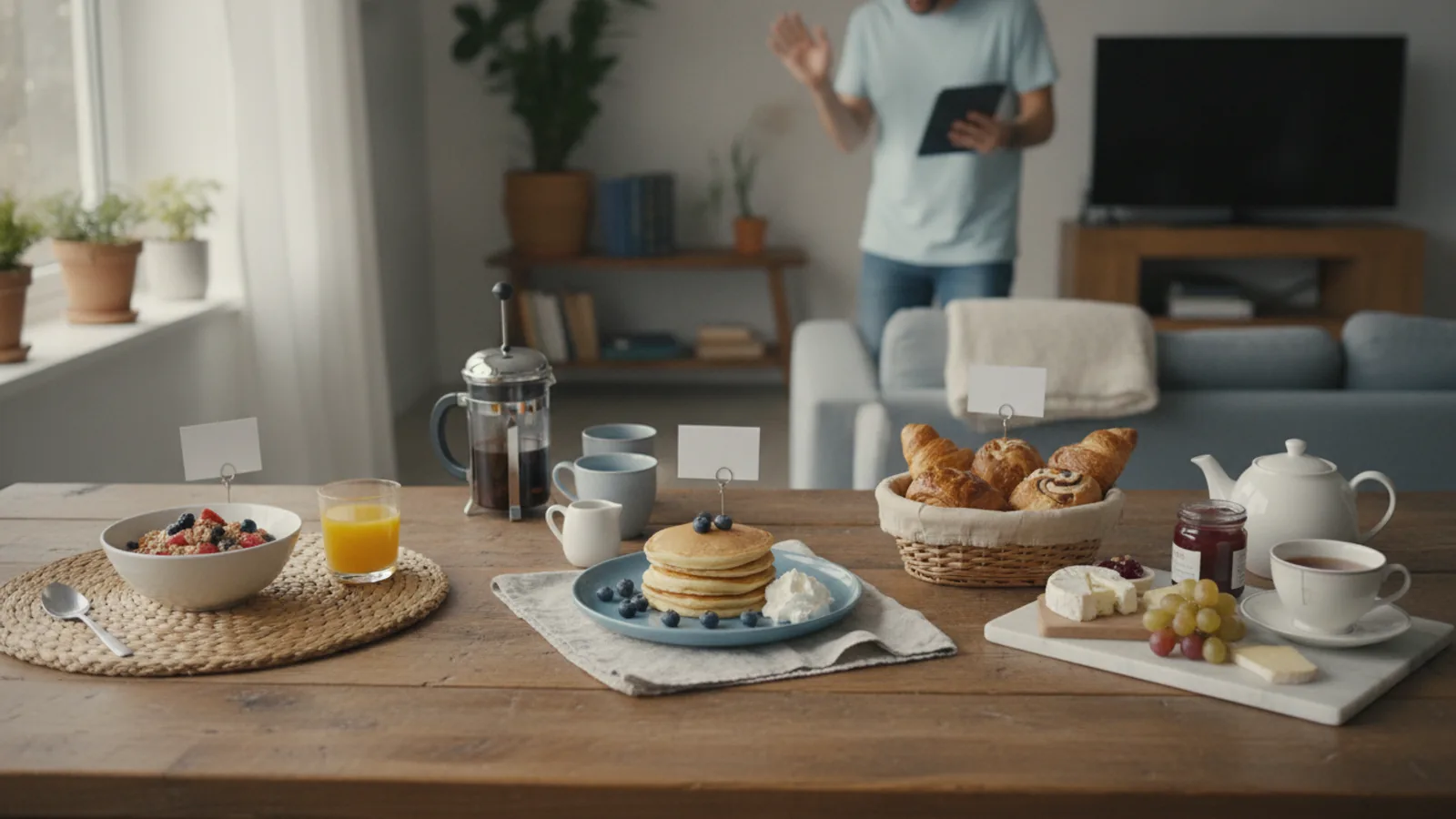
Aim for a mix of protein, whole grains, fruit, and something warm to drink. For instance, a spinach and cheese quiche (protein and veggies) with a side of whole-grain rolls (carbs) and a bowl of fresh berries (fruit) works well. Or choose a build-your-own yogurt parfait bar with Greek yogurt, granola, berries, and nuts. Keep the menu to two or three items total—one main, one side, one drink station. Avoid making three separate hot dishes that all need the oven at once. Write your menu down and check it against your time limit and dietary list. Remove any dish that feels too complicated. This matters because a simple menu reduces your workload and also reduces cleanup, making the whole morning feel lighter. Guests appreciate variety but not chaos.
Prepare Components the Night Before
Once your menu is set, break it down into tasks you can do the night before. For example, chop vegetables, grate cheese, cube bread, whisk eggs, and mix dry ingredients for pancakes if you're using them. Store everything in labeled containers in the fridge. For a casserole, layer ingredients in your baking dish, cover it, and refrigerate. For overnight oats, mix oats and milk in jars, add fruit in the morning. For a fruit salad, cut the fruit and store in a bowl with a squeeze of lemon. Also set out plates, cups, forks, and napkins on the table. Fill the coffee maker with water and ground coffee, and place mugs nearby. This step matters because these small actions drastically reduce your morning to-do list, letting you sleep later and wake up to a table that’s 80% ready.
Manage the Morning Flow and Serving
On the morning of, start by starting the oven or taking dishes out of the fridge to come to room temperature if needed. If you have a hot dish, set a timer for when to take it out so it doesn't overbake. While it cooks, you can prep your coffee station and set out the fruit. Have a plan for keeping food at the right temperature: use a slow cooker on warm for casseroles, or wrap a basket with a towel to keep toast warm. Place your serving spoons and labels next to each dish. Once guests arrive, point them to the buffet and let them serve themselves. You stay relaxed by not hovering—just be ready to refill drinks or direct someone to the bathroom. This matters because a smooth serving flow lets you mingle instead of feeling like a short-order cook.
Quick Reference
| Situation | Action | Why it helps |
|---|---|---|
| A friend says they have a gluten intolerance. | Choose a gluten-free main like a potato and egg casserole, and use gluten-free oats for any oatmeal. Read labels to ensure no wheat flour, and serve toppings in a separate bowl. | Avoiding cross-contamination and hidden gluten keeps the meal safe for the friend and prevents a stressful emergency. |
| You only have 15 minutes to cook because guests arrive early. | Use a make-ahead casserole that only needs reheating, or set out overnight oats with fruit and nuts. Put on coffee and let guests serve themselves. | A dish that just needs warming or assembling takes the pressure off you so you can greet friends warmly. |
| You wake up to find your overnight oats are too dry in the fridge. | Stir in extra milk or yogurt until you reach a creamy consistency, then add fresh fruit and a drizzle of honey to refresh texture and flavor. | Quickly adding liquid brings the oats back to a pleasant texture, making your planned dish work without a replacement. |
Common Issues
- The casserole is still cold in the middle even after following the recipe time.: Check your oven temperature with a separate thermometer (rarely, ovens run cool). If it's undercooked, put it back in for 10 more minutes, then test again. Make sure the dish was refrigerated – you may need to add 15-20 minutes. For next time, let it sit out for 30 minutes before baking to even out the temperature.
- Your fruit salad turns brown because you cut it too early.: Immediately toss cut fruits like apples, pears, or bananas in lemon or orange juice to slow oxidation. Store in an airtight container and keep chilled. If it's already brown, you can pick out the worst pieces and add fresh berries on top to improve appearance.
- Guests arrive and you realize you forgot to take the butter out of the fridge for toast.: Place a stick of butter in a microwave-safe bowl and heat for 10-15 seconds at half power until soft, then put it in a small dish. Or, use a cheese grater to shred cold butter and it will spread easily. This quick fix avoids serving hard butter that ruins toast.
Advanced Tips
- Create a 'breakfast board' using a large wooden cutting board with sections for hard-boiled eggs, cheese cubes, smoked salmon, cherry tomatoes, and sliced baguette – it's low-effort but looks elegant.
- Make a big batch of granola from oats, nuts, and dried fruit, and store it in a sealed jar for up to two weeks – a no-cook breakfast topping that adds crunchy contrast.
- Invest in a small slow cooker with a 'warm' setting to keep your main dish at the perfect temperature for hours without overcooking, freeing you to enjoy the morning completely.
Final Checklist
- Confirm guest count and dietary restrictions at least two days before so you can shop and choose recipes without rush.
- Prepare all make-ahead components the night before, and write a reminder note on your fridge so you don't forget anything.
- Set the table with plates, cups, utensils, and a pitcher of water the evening before to cut down on early morning tasks.
- On the morning, start by preheating the oven and setting out cold items, then use a timer to keep track of baking and stay on schedule.
FAQ
How far ahead can I actually prepare a breakfast casserole?
Most egg-based casseroles can be assembled up to 24 hours in advance if kept covered in the refrigerator. Mix the ingredients, pour into your baking dish, cover with plastic wrap then foil, and refrigerate. On the morning, add 15-20 minutes to the original baking time because you're starting from cold. You can also freeze unbaked casseroles for up to a month, but thaw overnight in the fridge before baking. This flexibility makes casseroles a top pick for low-stress hosting.
What's the best way to keep breakfast warm without drying it out?
Use a slow cooker on the 'warm' or 'low' setting, if you have one. For items like scrambled eggs or casseroles, place them in the slow cooker insert and set it to warm, stirring occasionally. If you don't have a slow cooker, you can cover the dish with foil and place it in an oven set to the lowest temperature (usually 150-170°F / 65-75°C) for up to 30 minutes. Avoid leaving food out at room temperature for more than two hours. Serving right away is simplest, but these methods let you keep things warm without overcooking.
Should I offer both sweet and savory breakfast options?
Yes, offering a mix usually satisfies everyone. You can satisfy sweet cravings with a basket of pastries (pre-bought or simple muffins) and fresh fruit, and savory with a make-ahead egg frittata or cheesy hash brown casserole. This approach also allows guests with different preferences to build their plate the way they like. If you're short on time, choose one sweet (like granola and yogurt) and one savory (like a casserole) to create balance. This increases the chance everyone finds something they enjoy, which is the essence of low-stress hosting.