How To Compare Options For A Useful Capsule Wardrobe For Changeable British Weather
A practical step-by-step guide to how to compare options for a useful capsule wardrobe for changeable British weather, including preparation, instructions, common issues, tips, and next steps.
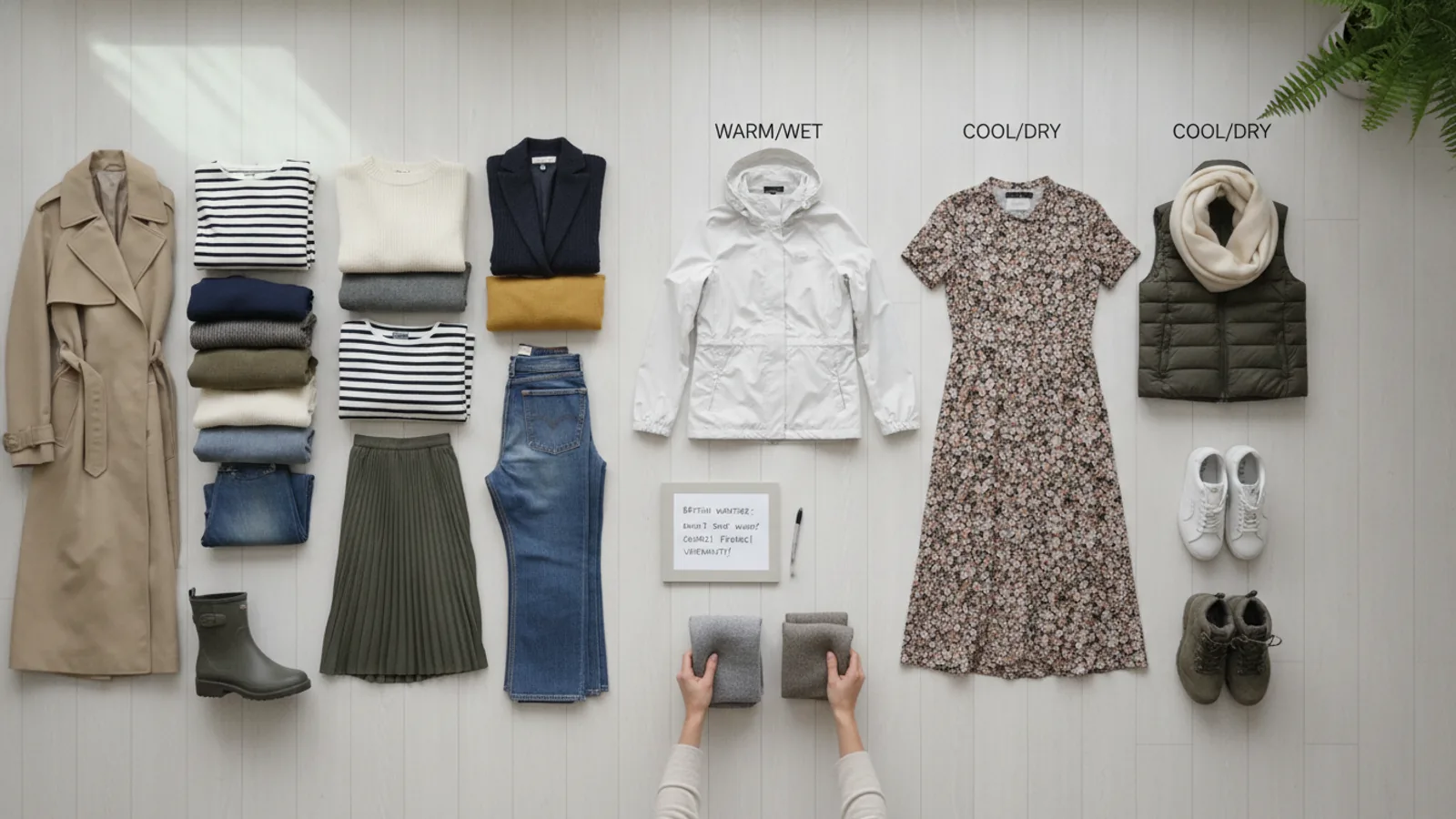
How To Compare Options For A Useful Capsule Wardrobe For Changeable British Weather
Building a capsule wardrobe for changeable British weather means choosing versatile, layerable pieces that cope with sun, rain, wind, and mild cold—often all in one day. This guide helps you compare your options by focusing on fabric, fit, and function, so you can invest in items that work together and last. You'll learn how to assess your lifestyle, prioritise key garments, and avoid costly mistakes. By the end, you'll have a clear method for selecting a small set of clothes that keep you comfortable and stylish, whatever the sky does.
Fast Answer
- Start by listing your daily activities and typical travel exposure, then choose three to five top layers and two to three bottom layers that you can mix and match in neutral and complementary colours.
- Prioritise fabrics that dry quickly, breathe, and insulate even when damp, such as merino wool, synthetic fleece, and treated cotton, and choose a waterproof but breathable outer shell for wet days.
Before You Start
- Audit your current wardrobe: take out everything you wear regularly and note gaps, worn-out items, and pieces you never use. This shows you what you really need to buy or replace.
- Track the weather patterns in your area for two weeks, noting daily temperature ranges, rain likelihood, and wind strength. This helps you choose versatile layers that match your local climate.
- Define your style and colour palette: pick two or three neutral base colours (like navy, grey, or beige) and one or two accent shades. This makes it easier to mix and match items.
- Measure your bust, waist, hips, and inseam, and try on existing clothes to understand your preferred fit (slim, regular, or relaxed). Knowing your measurements helps you compare garments objectively when shopping online or in store.
Step-by-Step Instructions
Assess Your Lifestyle and Weather Exposure
Begin by writing down a typical week: work or study hours, commute time, outdoor exercise, and social activities. Note how much time you spend outdoors and whether you sit in air-conditioned or heated spaces. For each day, estimate the temperature range you'll encounter, from early morning to evening. This step is the foundation of your capsule, because your clothes must work for your real life, not a generic ideal. For example, if you cycle daily, you need fabrics that wick moisture and dry fast; if you spend hours in a draughty office, you need a warm mid-layer that is easy to remove. After listing your activities, compare them with local weather patterns—rain frequency, wind, and seasonal temperature swings. The goal is to identify the most demanding situation, such as a morning commute in drizzle followed by a warm afternoon in a stuffy room. By understanding your specific exposure, you can choose pieces that add or remove warmth easily, and that can handle rain and wind without feeling bulky. This assessment prevents you from buying items that look good but fail to support your daily routine. Once you have this list, keep it handy as you evaluate each potential garment.
Select a Versatile Base Layer
The base layer sits next to your skin, so it must manage moisture and regulate temperature. For changeable weather, choose long-sleeved tops in merino wool, bamboo, or a high-quality synthetic with a 4-way stretch. Merino is excellent because it insulates even when damp and naturally reduces odour, but synthetic blends can be more durable and quicker to dry. Avoid cotton because it absorbs sweat and stays wet, making you cold and uncomfortable. When trying on a base layer, check that the sleeves stay put when you raise your arms, the neck fits snugly without chafing, and the fabric doesn't cling or bunch. You need at least three base layers: one lightweight for mild days, one midweight for cooler days, and one that you can roll up sleeves on for warmer afternoons. Consider the colour: light neutrals like grey or cream hide less dirt but show sweat less; dark colours hide stains but absorb more heat. For windproofing, look for a base layer with a brushed interior or a high neck that can be zipped. The fit should be snug but not tight, allowing a thin air pocket for insulation. Before buying, compare the fabric weight and care instructions: some merino needs hand washing, while synthetics are machine-washable and dry quickly.
Choose a Flexible Mid Layer
A mid layer provides insulation and can be added or removed with ease. The best options are lightweight fleece, a quilted vest, or a thin down jacket, but avoid anything too bulky for your climate. Look for a full zip or button opening so you can vent heat without removing the whole garment. The fabric should be breathable and wick moisture away from your base layer—fleece is a reliable choice, while some wool jackets offer warmth without weight. When comparing mid layers, check the shoulders and underarms for freedom of movement, and ensure the hem falls below your waistline so it doesn't ride up. You need at least one mid layer that packs into its own pocket or a small stuff sack, because British weather can turn from cold to mild in hours. Consider a vest, as it keeps your core warm while leaving your arms free for movement and less bulk. The colour should fit your palette: a dark grey or olive works well. Test the zipper quality by pulling it several times; a faulty zip is the most common point of failure. Also, check the pocket placements—chest pockets are useful for a phone, but they may become bulky when you sit. Finally, read the care label: some mid layers require gentle cycles, which may be impractical if you wear them daily.
Pick a Reliable Outer Shell
The outer shell is your shield against rain and wind, so it must be fully waterproof and breathable. Prioritise a jacket with taped seams, a storm flap over the zip, and an adjustable hood that fits over a hat. Look for a waterproof rating of at least 1000mm, but also check the breathability, often given in grams of vapour permeation. Your shell should be long enough to cover your hips, but not so long that it restricts walking or cycling. Pit zips are a huge advantage for ventilation during active rain. The hood should have a stiffened brim to keep rain off your face and a drawcord to adjust. Colour options include bright shades like yellow or red for visibility, or muted tones like navy or forest green. Try the jacket on with your mid layer and base layer to ensure you can move your arms freely and there's room for a thick fleece. Also, check the cuffs: they should be adjustable so they don't let water in. The shell needs at least two pockets, ideally hand warmers positioned above your seatbelt or backpack straps. When comparing shells, test the fabric's rustle—some are noisy—and check how easily it packs into a small bag; a packable shell is essential for unpredictable weather. Finally, consider the weight: a heavy hard shell may be durable but can be overkill for moderate rain.
Build a Practical Bottom Set
For bottoms, you need trousers or jeans that are cut comfortably for movement and dry quickly if caught in a shower. Denim is heavy and absorbs water, making it poor for rainy days, so look for water-repellent coated cotton, polished cotton, or lightweight synthetic blends. Choose a straight or tapered fit that allows you to walk comfortably and does not drag on the ground. Reinforced knees and a gusseted crotch are excellent for durability and ease of movement. You need at least two pairs: one that can be dressed up, and one that feels more casual. For warmer days, consider shorts or a skirt—but always pair them with a compressed layer of tights or leggings that you can throw in a bag. Compare the rise and waistband: a mid-rise sits comfortably and stays in place. Check the pockets: front pockets should be deep enough for a phone, and back pockets should button or zip to keep valuables dry. Also, examine the fabric's breathability—quick-dry trousers are ideal. When trying them on, do a squat, a high knee, and a walk to ensure no restriction. For extreme wet weather, consider a pair of lightweight waterproof over-trousers that you can pull over your normal bottoms; these should be packable and have ankle zips. Avoid trousers with excessive hardware or complicated closures that might catch on things.
Complete the Capsule with Layering Accessories
Accessories are the final layer that makes your capsule work: a hat, a scarf or neck gaiter, gloves, and an umbrella. For weather flexibility, choose a hat with a brim that can keep rain off your face and shade your eyes—a packable wide-brim or a cap with a neck flap. For your neck, a merino wool scarf or a synthetic buff is lightweight and can be pulled up over your chin on cold windy days. Gloves should have a touchscreen-compatible index finger and thumb if you use a phone, and they must allow dexterity for picking up small items. If you prefer an umbrella, pick a compact wind-resistant model with a sturdy frame, but remember that an umbrella leaves your hands occupied and may not handle strong gusts. When comparing accessories, focus on materials that insulate even when damp—wool and fleece are better than cotton. Also, ensure your accessories don't clash with your colour palette; choose them in neutral or matching accents. The key is to buy pieces that can be used separately or together, like a neck gaiter that can also be worn as a headband. Store your accessories in a dedicated coat pocket or a small pouch in your bag so you're never caught out without them.
Quick Reference
| Situation | Action | Why it helps |
|---|---|---|
| Morning rain showers but sunny afternoon: you'll want a waterproof shell that can be stowed. | Wear a lightweight packable rain jacket over your base and mid layers; when the sun comes out, fold it into its pocket and store it in your bag. | This keeps you dry during the rain and prevents overheating later, because the jacket is easy to remove and pack. |
| Temperature swings of 10 degrees Celsius from morning to afternoon: you need a layer that adds warmth without bulk. | Start with a lightweight base top and a mid fleece; add a wind-resistant outer layer for the coldest part, then remove the fleece when it warms. | Adapting your layers lets you regulate temperature exactly, avoiding sweating or shivering as conditions change. |
| Sudden downpour while you're out walking for a long time: your typical jacket may not hold up. | Carry a compact waterproof poncho or over-trouser in your bag, and put it on over your jacket and trousers before you get soaked. | Over-layers provide extra rain protection without ruining your normal clothes, and they pack small for emergency use. |
Common Issues
- You're sweating inside your waterproof jacket because it isn't breathable: Choose a jacket with pit zips or a fabric with high breathability (expressed in grams). Open pit zips and unzip the front a few centimetres to let heat escape; if sweating persists, you need a lighter base layer.
- Your merino wool base layer pills after a few washes: Turn the garment inside out and wash on a gentle cycle with cold water; use a laundry bag. Air-dry it flat instead of using a tumble dryer, and avoid fabric softeners which break down the wool fibres.
- Your trousers dry too slowly after a rainy walk: Choose trousers with a water-repellent treatment or a quick-dry fabric. For existing trousers, reapply a water-repellent spray after a couple of washes. Also, bring a pair of roll-up rain pants in your bag as a fast layer.
Advanced Tips
- Implement a 'use and test' rule: for every new garment you consider, wear it indoors for a whole hour to test comfort, movement, and breathability before making a final decision.
- Learn to layer with 'thin multiples' rather than one thick garment; this lets you fine-tune warmth and adapt quickly to changing conditions like a sudden breeze or bright sun.
- Create a small 'weather kit' in your workspace or car containing a spare scarf, a cap, and a lightweight insulation layer, so you're always prepared for unexpected weather shifts.
Final Checklist
- Review your wardrobe and remove any item that doesn't fit your daily needs or colour palette; donate or recycle responsibly.
- Check that your chosen pieces can be layered in at least three different combinations, like base+shell, base+mid, or all three together.
- Verify that every fabric is suitable for your climate: quick-dry, breathable, and insulates when damp, and follow care labels to maintain performance.
- Take a final walk in your full capsule outfit during a typical weather day, noting any discomfort or need for adjustment, and swap out pieces that fail this test.
FAQ
How many items do I really need in a capsule wardrobe?
A capsule typically contains 20 to 30 items, but the key is not the number—it's that every piece can be worn with several others. For British weather, you need at least three base layers, two mid layers, one waterproof shell, and three pairs of trousers, plus accessories. Start with the minimum and add only if you find a genuine gap.
Can I use a single jacket for all weather?
No single jacket handles every situation, but one quality waterproof breathable shell can be used year-round if you vary the layers underneath. In summer, wear it over a thin top for rain; in winter, add a fleece and down vest. The shell should have ventilation options like pit zips for when you exert yourself.
What's the best way to care for merino wool garments?
Merino wool benefits from gentle care: wash in cold water with a mild detergent made for wool, on a delicate cycle. Turn the garment inside out and place it in a mesh bag. Do not wring or twist; instead, press out excess water with a towel and lay flat to dry. Fold rather than hang to avoid stretching.