How To Plan A Make Up Bag That Works For Travel And Everyday Touch Ups
A practical step-by-step guide to how to plan a make-up bag that works for travel and everyday touch-ups, including preparation, instructions, common issues, tips, and next steps.
How To Plan A Make Up Bag That Works For Travel And Everyday Touch Ups
Planning a make-up bag that serves both travel and everyday touch-ups requires a thoughtful approach to product selection, organization, and hygiene. This guide will help you streamline your essentials, choose versatile items, and maintain a compact kit that fits your lifestyle. By focusing on multi-purpose products and smart storage, you can create a practical kit that saves time and space while ensuring you're prepared for any occasion.
Fast Answer
- Start by listing your daily make-up routine and identifying products you use most often; include only those in your bag, prioritizing multi-functional items like a tinted balm that works on lips and cheeks.
- Choose a bag with clear compartments or use small pouches to separate categories, and pack travel-sized versions of liquids to comply with airline regulations and lighten your load.
Before You Start
- Clear out your current make-up collection and categorize products into daily use, occasional use, and never use; discard expired items or those past their prime, and give away or sell products you don't use.
- Think about your daily routine and the specific occasions you'll need touch-ups for, such as after meals, workouts, or during long workdays, and list the products that address those needs.
- Invest in a quality make-up bag with padded dividers or multiple compartments to protect items and keep them organized; consider a bag that fits your handbag or carry-on luggage dimensions.
- Collect travel-sized containers and labels for decanting liquids like foundation, concealer, and setting spray, ensuring they are clean and dry before filling.
Step-by-Step Instructions
Assess Your Daily Make-Up Needs and Travel Destinations
Begin by evaluating your typical make-up routine and how it might change during travel or on a regular day when you'll need touch-ups. Consider the climate of your destination (for example, humid environments may require more mattifying products, while dry ones might need extra hydration) and the types of activities you'll be doing. For everyday use, think about the times you usually reapply: after lunch, before a meeting, or before an evening out. Write down the products you absolutely need for these moments, such as a pressed powder for oil control, a lipstick that lasts, or a concealer for quick fixes. Be honest about what you truly use; avoid packing items that just take up space. This step is crucial because it prevents overpacking and ensures your bag contains only what serves you best, making it both lighter and more efficient.
Select Multi-Purpose Products to Minimize What You Pack
When choosing products for your bag, prioritize items that can serve more than one purpose to reduce the total number of products you need. For example, a creamy blush can double as a lip tint, and a neutral eyeshadow palette can be used for eyebrows, eyeliner, and even contour if the shades are matte. A tinted moisturizer with SPF can replace foundation and sunscreen. Look for products like lip-and-cheek tints, multi-sticks, or eyeshadow palettes with a mix of matte and shimmer shades. As you evaluate your regular routine, identify where you can replace separate items with a single multi-tasker. This approach not only saves space but also simplifies your routine, making it quicker to apply and reducing the risk of leaving something behind. For travel, this is especially valuable because you might have limited room and want to minimize weight.
Decant Liquids Into Travel-Sized Containers and Label Them
For liquid products like foundation, concealer, and setting spray, transfer a small amount from your full-size containers into travel-sized bottles to save space and comply with airline rules. Start by cleaning your small containers thoroughly and allowing them to air dry. Use a small funnel or a pipette to pour the product without spilling. Fill each container only about three-quarters full to leave room for expansion if pressure changes during travel. Label every container with the product name and shade, using a permanent marker or adhesive label, so you don't mix them up. Place these bottles in a clear, resealable plastic bag for easy inspection. This step is essential because it prevents leaks, keeps your bag organized, and ensures you have the exact shades you need. For everyday touch-ups at work or school, carrying a small bottle of foundation is more practical than a full-size one.
Arrange Your Bag With Clear Sections That Match Priority
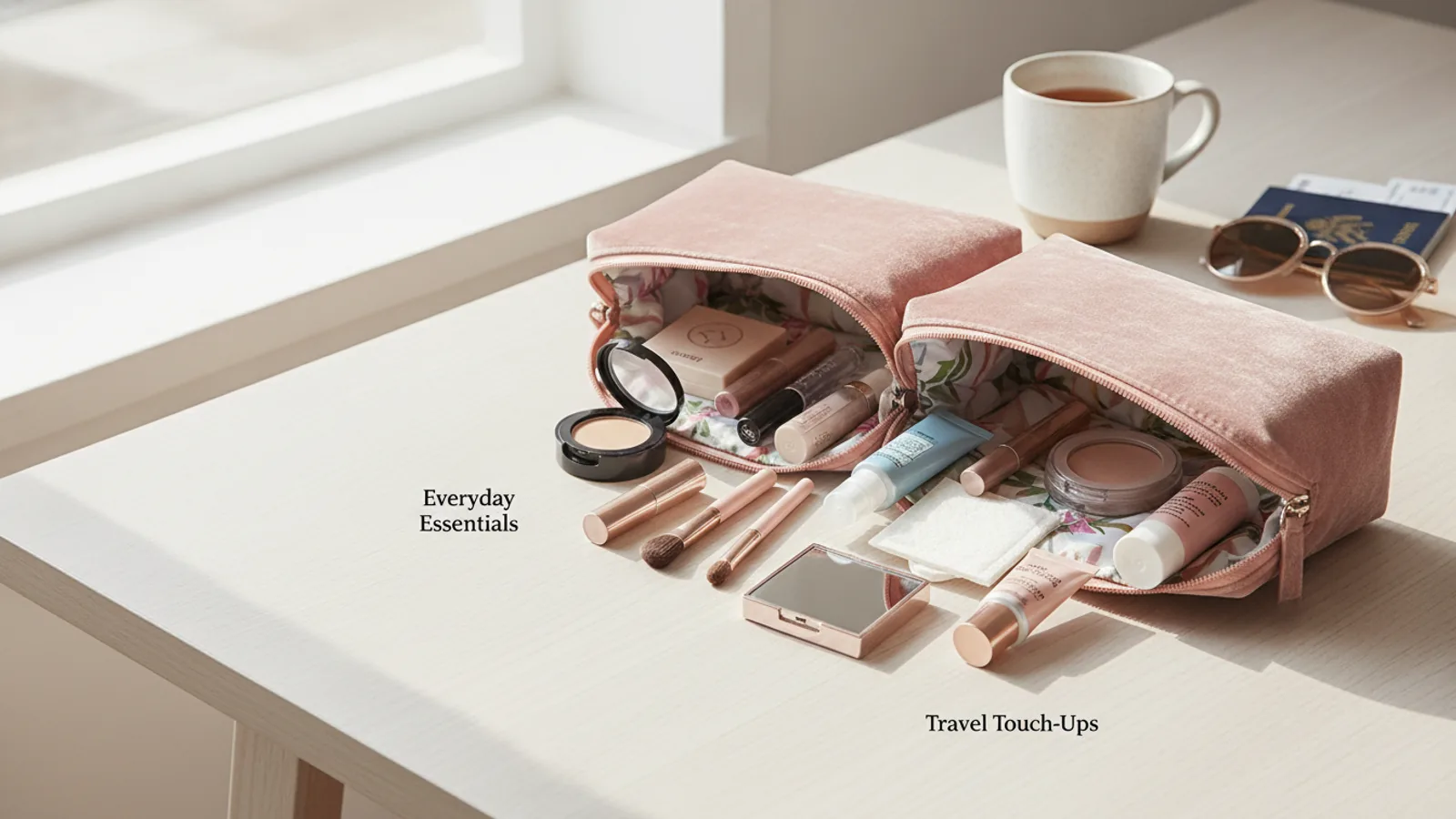
Once you have your selected products, divide your make-up bag into logical areas or use small pouches to group items by use. For example, designate one pouch for skin (foundation, concealer, powder), another for eyes (eyeshadow, eyeliner, mascara), and a third for lips and cheeks. If your bag doesn't have compartments, use makeup pouches or even clean, empty containers like pill organizers. Place items you use most often (lipstick, powder, compact mirror) in easily accessible spots, either at the top or in an outer pocket. This arrangement saves time during touch-ups and makes it easy to find what you need without rummaging. For travel, this also ensures that fragile items are cushioned and that you can quickly grab only what you need for a restroom stop. This step matters because an organized bag reduces frustration and prevents items from getting damaged.
Add Essential Tools and Hygiene Extras to Your Daily Kit
Beyond actual cosmetics, your make-up bag should include a few tools and hygiene items: a small compact mirror (if your bag doesn't have one), a flat brush or sponge for applying foundation, an eyelash curler, and a spoolie brush for eyebrows. Also pack cotton swabs, blotting papers, and a mini hand sanitizer to clean hands before applying make-up. Include a small tube of makeup remover or cleansing wipes for correcting mistakes or removing make-up at the end of the day. These extras may seem like they add bulk, but they are essential for maintaining hygiene and achieving polished results. For travel, you might also consider a makeup setting spray to refresh your look. This step ensures that you can apply and fix your make-up anywhere, which is particularly useful when you're on the go and don't have access to a full vanity.
Review and Adjust Your Kit Based on Daily Experience
After using your new make-up bag for a few days at home or during a short trip, take time to evaluate what works and what doesn't. Notice if you find yourself missing a product, if something is never used, or if items are damaged or leaking. Don't be afraid to swap items or change your organization. For example, if you never use your eyeliner, replace it with a favorite lip gloss. If your mascara dries out quickly, consider a travel-sized version or a mini that you replace more often. This review step is critical because it helps you personalize your bag over time, ensuring it becomes more efficient and tailored to your habits. As you travel more, your needs may change, so periodically reassess your bag to keep it relevant.
Quick Reference
| Situation | Action | Why it helps |
|---|---|---|
| You're going on a weekend trip and only have a carry-on. | Pack a streamlined bag with multi-use items like a tinted balm, a small eyeshadow palette that doubles as blush and highlighter, and travel-sized liquids in your carry-on. | A multi-use approach saves space and ensures you have a complete look without carrying too many items, which is ideal for limited carry-on space. |
| You need to refresh your make-up for an evening event right after work. | Keep a small pouch with blotting papers, a pressed powder, a lipstick, and a mini mascara in your work bag so you can quickly touch up before going out. | Having these essentials on hand allows you to refresh in minutes, avoiding the need to go home and ensuring you look polished for the event. |
| You're traveling to a humid climate and worry about your make-up melting. | Choose waterproof and oil-controlling products, wear a primer, and pack a mini travel-size setting spray to refresh your make-up during the day. | In humid conditions, these products are more likely to stay in place, and a setting spray can help lock your make-up and reduce shine. |
Common Issues
- Leaking liquid foundation in your bag.: Before packing, ensure bottle caps are tightly closed, then place each liquid in an individual resealable plastic bag or use travel bottles with leak-proof seals. Also, store liquids in a separate compartment or pocket to prevent damage to other items.
- Mascara dries out quickly, making it unusable.: Store mascara upside down in a bag or pouch, and avoid pumping the wand to introduce excess air. If it begins to dry, add a drop of contact lens solution or eye drops, but replace it regularly as it's a hygiene risk.
- Powder products break during travel.: Place cotton pads or a tissue in the lid of the compact to cushion the powder, and wrap compacts in a soft cloth or bubble wrap. Store them in a hard-sided case or a pocket that prevents them from banging against other items.
Advanced Tips
- Use a magnetic palette with slim, flat pans for eyeshadow and blush, allowing you to customize your shades and reduce bulk compared to standard compacts.
- Consider a water-resistant makeup bag with a wipeable lining, which is easier to clean and protects contents from spills or moisture.
- Use a small, clear pill organizer to section off jewelry or tiny items? Actually, for makeup, use it to store small items like bobby pins, earrings, or contact lens cases, keeping them from becoming lost.
Final Checklist
- Review your typical week and identify the exact moments when you touch up your make-up, so your bag aligns with real needs.
- Select a bag with defined compartments or add pouches to keep your selected products organized by category.
- Decant all liquid products into appropriately sized, leak-proof travel containers and label them clearly.
- Test your fully packed make-up bag by carrying it around for a day to ensure it's not too heavy and that all products fit securely without damage.
FAQ
What is the bare minimum for a travel make-up bag?
The absolute essentials typically include a tinted moisturizer or BB cream with SPF, a concealer, a multi-purpose cream blush that works on lips too, a small eyeshadow palette with neutral shades, a mascara, and a lipstick or balm. Add tools like a beauty blender or brush, and a travel-sized setting spray if you use it. This covers most needs without being bulky.
How do I decide between a full-size and travel-size product?
Consider how often you use the product. For daily essentials like foundation or setting spray, travel-size is convenient for portability, but if you use it heavily, you may need to refill often. For special occasion items, travel-size is perfect. For products like mascara that expire or dry quickly, travel-size is better to use up before it goes bad. For powders that you use daily and last long, full-size is okay if your bag can handle it.
How often should I clean my make-up bag?
Ideally, clean your make-up bag every two weeks to prevent bacteria build-up. Empty it and wipe the interior with a gentle cleanser or make-up brush cleanser, then let it air dry completely before putting items back. Also, wash any brushes and tools weekly and replace make-up sponges regularly, as they harbor bacteria.